Asking how old China is takes you on a really cool trip through one of the world’s most ancient civilizations that’s still going strong. When folks ask about China’s age, they’re not just looking for numbers – they want to know about the rich cultural heritage that’s lasted thousands of years. This search covers everything from ancient ruins and old records to traditions that still link today’s China with its distant past. Starting with the legendary Xia dynasty and the solid evidence from the Shang era, China’s history shows a continuous cultural thread that still shapes our world.
Table of Content
Let’s figure out China’s historical timeline
China’s civilization started with archaeological finds
Here’s the core idea: we’ve found proof of early Chinese civilization at many archaeological sites, way before people started writing things down At Jiahu in Henan.
they uncovered settlements from 7000 BCE – that’s where people made the world’s first alcoholic drinks and maybe even early Chinese writing Then there’s the Yangshao culture from 5000 to 3000 BCE – they were really good at making pottery and farming These finds show us that complex societies existed way before the dynasties we usually talk about
How do we verify this history? Well, today’s experts mix archaeology with old records to piece together China’s timeline Take the Xia Dynasty around 2070-1600 BCE – people used to think it was just a legend.
but digs at Erlitou sites have made it more believable Then came the Shang Dynasty from 1600-1046 BCE – they left us the first solid written records on oracle bones We’ve found over 150.
000 of these artifacts showing royal life, star watching, and government work – clear proof they had an advanced civilization back then
Now let’s talk about China’s continuous civilization versus its changing governments
Here’s what’s really special about China’s age – it’s not just how old it started, but how the culture kept going without breaking Other old civilizations either vanished or changed completely.
but China’s culture still connects directly to its ancient roots Look at Chinese writing – you can trace it straight from those old oracle bones to today’s characters Even Confucianism, which started around 551-479 BCE, still shapes our social values and schools today
Here’s an important point: we need to separate China as a cultural civilization from China as a political country The People’s Republic started in 1949.
but the idea of China as a cultural and geographical place has been around for thousands of years Check out this table showing the main steps in China’s political story
| Time period | What ruled China | How long it lasted | Why it matters |
|---|---|---|---|
| Around 2070-1600 BCE | Xia Dynasty | About 470 years | First traditional dynasty |
| 221-206 BCE | Qin Dynasty | 15 years | First time China became one empire |
| 1368-1644 CE | Ming Dynasty | 276 years | When China’s territory really came together |
| 1949 to now | People’s Republic of China | Still going | Modern political country |
Major Dynastic Periods and Their Contributions
Early Imperial Consolidation
Unification achievements: The Qin Dynasty didn’t last long, just from 221 to 206 BCE, but it set up China’s imperial government system that kept going for two thousand years.
Emperor Qin Shi Huang made writing, measurements, and money the same everywhere, bringing together states that used to fight each other. You can see how skilled Qin craftsmen were and how well they organized things from the Terracotta Army.
which is his most famous leftover treasure. Then came the Han Dynasty, lasting from 206 BCE to 220 CE, which grew China’s land and made Confucianism the official philosophy, building cultural roots that shaped Chinese civilization.
Cultural foundations: In Han times, China created the Silk Road, linking up with Central Asia and places further away. That period brought improvements in making paper, earthquake detection, and tools for studying stars.
The Han started the civil service exams too, and these tests kept going in different ways right up until 1905. We learn lots about early Chinese history from records of that time.
especially Sima Qian’s Records of the Grand Historian, which still gives us the basics for understanding how old China really is.

Golden Ages and Cultural Flourishing
Tang Dynasty prosperity: The Tang Dynasty, from 618 to 907 CE, was one of China’s most open and culturally exciting times. Back then, Chang’an, what we now call Xi’an, grew into the biggest city worldwide, with around two million people living there.
This dynasty did amazing things in poetry, painting, and pottery, with famous guys like Li Bai and Du Fu writing poems people still love now. Trade boomed on the Silk Road, bringing in all sorts of cultural ideas that made Chinese art and everyday life richer.(Guan, Kwa Chong (2016). The Maritime Silk Road: History of an Idea (PDF). NSC Working Paper (23): 1–30. Archived from (PDF) on 8 March 2021. Retrieved 18 June 2024.)
Song Dynasty innovations: During the Song Dynasty, from 960 to 1279 CE, China went through tech and money changes that happened way before other places caught up.
This time brought us movable type for printing, paper money, uses for gunpowder, and better farming methods. Lots more people lived in China then, and cities built up complex business systems.
Song landscape paintings and pottery, especially their celadon ware, show artistic successes that still affect Chinese taste in beauty today.

Archaeological finds that show how ancient China really is
Some major archaeological discoveries
Oracle bones were found at Yinxu, the Shang Dynasty’s final capital. This gave us the first hard proof of China’s early history. People used these bones and shells for fortune-telling. They recorded kings rules, wars, stars, and everyday life.
They’re from around 1600 to 1046 BCE. This is the oldest Chinese writing we have, and it’s been key to checking if old stories are true.
China’s Bronze Age was pretty advanced. The Shang and Zhou dynasties made these ritual vessels that show amazing skill and art. These bronzes often have historical info carved on them. They show they were great at metalwork and had a complex society.
Take the Simuwu Rectangle Ding – it weighs 875 kilos! It’s the heaviest ancient bronze vessel found anywhere, which shows how much China could produce back then.
New finds and updated timelines
At Liangzhu in the Yangtze Delta, from 3300 to 2300 BCE, archaeologists found a society we’d underestimated. They had advanced water systems, grew rice, and made jade. Liangzhu became a UNESCO site in 2019.(Joint office to help guide Yangtze River Delta area. english.gov.cn. Retrieved June 3, 2019.)
It shows state-level organization from over 5,000 years ago. This makes China’s complex civilization older than we thought and challenges the idea that it all started in the north.
New scientific dating methods have changed how we see China’s ancient timeline. From 1996 to 2000, the Xia-Shang-Zhou Chronology Project used archaeology and old star records to build a better timeline of early China.
Not everyone agrees with all the findings, but it showed how mixing different fields can help check China’s history.

Cultural Traditions Demonstrating Historical Continuity
Enduring Cultural Practices
Dragon Boat Festival significance: The Dragon Boat Festival happens on the fifth day of the fifth lunar month, and it really shows how China’s cultural heritage is still alive today.(Open University,The ethics of cultural heritage: 1 The inseparability thesis,accessed 7 May 2023)
It might have started way back in the Warring States period with Qu Yuan, and people still keep up traditions like dragon boat racing and eating zongzi.
These sticky rice treats wrapped in bamboo leaves have been made for thousands of years – records from the Han Dynasty talk about similar foods. Keeping these traditions going for so many centuries shows how China’s culture has continued unlike other ancient civilizations.
Philosophical continuity: Confucian values began about 2,500 years back and still shape how Chinese people handle relationships, education, and government.
You can still see this focus on family loyalty, respecting elders, and valuing education in modern Chinese society. Same goes for Daoist ideas about living in harmony with nature and traditional Chinese medicine – they still matter today.
even with all our modern advances, proving these old ways of thinking still affect how we live now.
Linguistic and Artistic Heritage
Written language evolution: China’s writing system is the world’s oldest that’s still in use. Today’s characters clearly come from ancient forms like oracle bone script, then bronze inscriptions, seal script.
clerical script, standard script, and finally simplified characters. Because this tradition never broke, people today can still read texts that are thousands of years old.
Calligraphy became a real art form that keeps ancient techniques and beauty standards alive, and people still actively practice it today.
Traditional arts preservation: Take Beijing opera – it mixes music, singing, mime, dance, and acrobatics. It started in the Qing Dynasty back in the 18th century, but it actually draws from performance traditions that are much older.(Asian Theatre | UHM Dept. of Theatre Dance.manoa.hawaii.edu. Retrieved 2023-09-25.)
Chinese landscape painting still follows beauty rules set up in the Song Dynasty, and ceramic arts keep using techniques that artists perfected during different dynasties. These art forms show we’re still connected to China’s really deep historical roots.
Let’s compare some ancient civilizations
Where China fits in world history
When we look at how long civilizations lasted, China really stands out because it kept its culture and political traditions going continuously Other ancient civilizations like Mesopotamian, Egyptian.
and Indus Valley either disappeared or got taken over by others, but China kept its core identity for thousands of years Here’s how China stacks up against other early civilizations in terms of how long they lasted and whether they kept going:
| Civilization | Time Period | Continuous Tradition | Modern Descendants |
|---|---|---|---|
| China | c. 2000 BCE-present | Yes | Direct |
| Ancient Egypt | c. 3100-332 BCE | No | Cultural influence only |
| Mesopotamia | c. 3500-539 BCE | No | Cultural influence only |
| Indus Valley | c. 3300-1300 BCE | Uncertain | Debated |
So why did China last so long? A few key reasons: it was pretty isolated geographically with mountains, deserts and oceans acting as natural barriers, its culture unified early on, farming society stayed stable, and it was really good at absorbing other cultures China also developed writing and government bureaucracy really early, which created systems that kept working even through political upheavals and foreign invasions over the centuries
Preserving history and modern identity
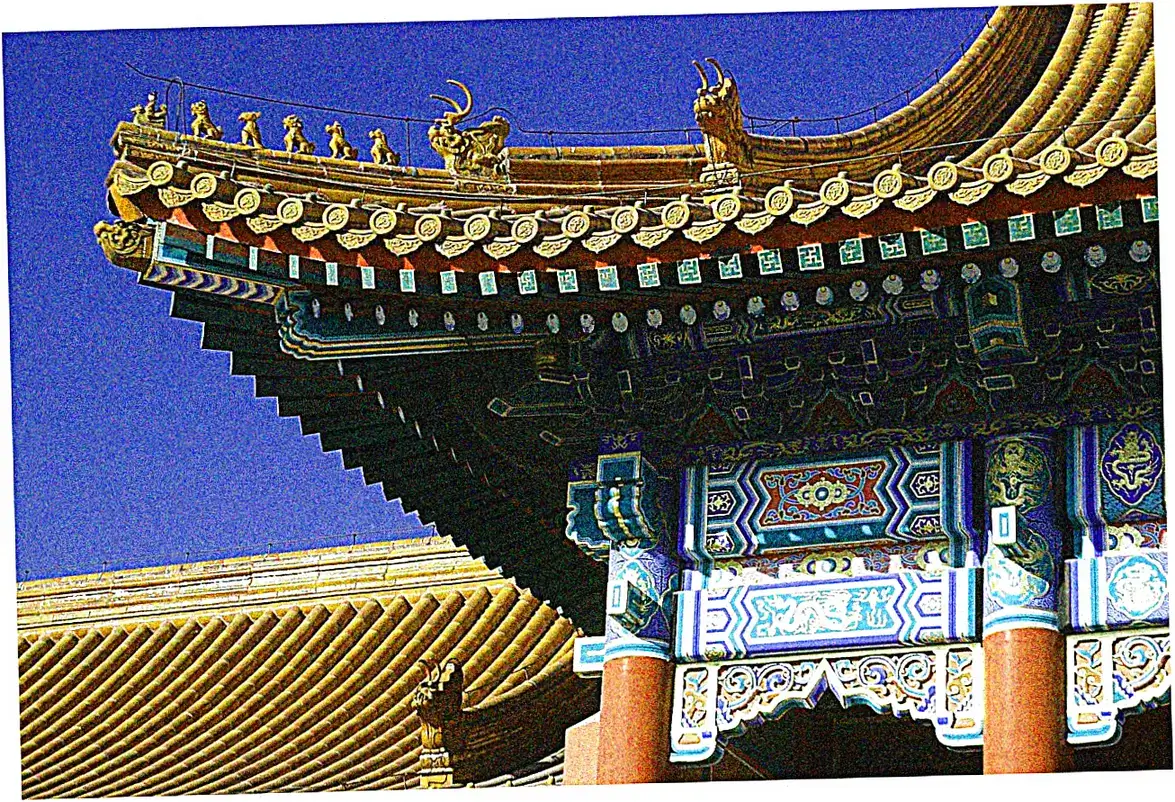
China works hard to preserve its ancient history through lots of archaeology, museum collections, and UNESCO World Heritage sites Take the Forbidden City in Beijing – they started building it in 1406 during the Ming Dynasty.
and it’s one of the best-preserved ancient building complexes in the world Then there’s the Great Wall, with parts going back to the 7th century BCE – it represents both amazing ancient engineering and China’s unbroken history
Knowing how old China is matters today – it’s not just academic, it actually shapes China’s national identity and how it deals with other countries China’s sense of its long history affects how it governs.
handles cultural policies, and conducts foreign relations China sees itself more as a civilization-state than just a regular nation-state, and this comes directly from its incredible historical continuity, giving it unique views on development and global involvement
Visiting China’s Ancient Sites Today
Historical Tourism and Cultural Experience
China famous tourist places with historical significance: You can really feel China’s ancient history at lots of well-kept sites. Back in 1974, they found the Terracotta Army in Xi’an – it shows how advanced Qin Dynasty craftsmen and military were.
The Forbidden City lets you see how Ming and Qing emperors lived, and the Great Wall shows defensive building from many dynasties. These places give you real links to China’s long past and draw millions of visitors every year who want to understand how deep Chinese civilization goes.
Cultural immersion opportunities: Besides famous spots, you can experience living history through festivals, food traditions, and arts. Joining the Dragon Boat Festival shows how old traditions stay alive now.
Checking out centuries-old temples shows how spiritual practices continue. Even daily things like drinking tea link back to Tang Dynasty traditions, when Lu Yu’s tea book made Chinese tea culture official.
Educational Resources and Further Study
Academic programs and museums: Lots of places around the world focus on Chinese history and archaeology. Beijing’s National Museum has over 1.4 million items, with many key artifacts that record China’s ancient history.
Chinese and foreign universities have special Chinese history programs, and dig teams keep finding things that help us understand China’s timeline better. Now digital stuff lets international people access lots of original sources and dig reports.
Recommended reading: If you want to understand more deeply, key books include The Cambridge History of Ancient China, dig reports from big sites like Yinxu and Liangzhu, and translated old records like Sima Qian’s historical writings.
Lately, research uses more scientific dating and mixed approaches, giving us better understanding of China’s growth as one of Earth’s oldest continuing civilizations.
China’s amazing unbroken history is one of humanity’s biggest civilization successes. From thousand-year-old archaeological finds to living traditions that keep changing, Chinese civilization shows incredible toughness and ability to adapt.
To understand how old China is, you need to see not just dates but the cultural, philosophical and system connections tying modern China to its ancient roots. This deep history sense still shapes China’s current identity and world role.
If China’s ancient history fascinates you, think about visiting dig sites, reading translated old documents, or trying cultural traditions that lasted centuries. Backing preservation work and ongoing research helps keep this amazing history available for future generations to learn from and enjoy.
FAQ About how old is china
What is the actual age of Chinese civilization?
Chinese civilization is about 4,000 years old according to Shang Dynasty records from around 1600-1046 BCE. But we’ve found even older stuff from the Xia period and Neolithic cultures that push the timeline back further.
What’s really amazing is how China kept developing its culture, politics, and philosophy without major breaks. That’s why it’s considered one of the world’s oldest continuous civilizations.
How does China’s age compare to Egypt’s?
Now, Ancient Egypt goes back to around 3100 BCE, which is older than China’s early dynasties. But here’s the thing – Egyptian civilization had lots of breaks and eventually got absorbed by other cultures.
China kept much better continuity. You can see direct links in culture, language, and history between modern China and ancient times – something Egypt can’t really match.
What evidence supports China’s ancient history?
We’ve got tons of evidence showing how old China really is. There are oracle bones from the Shang Dynasty, ancient sites like Yinxu and Erlitou, inscribed bronze vessels, old history books.
and scientific dating of artifacts. And recent finds at Liangzhu show China had complex societies going back more than 5,000 years!
How has Chinese culture remained continuous?
So how did Chinese culture stay continuous for so long? A few reasons: it was pretty isolated geographically, had early unification, kept its writing system even as pronunciation changed, adapted its philosophical traditions.
and was great at absorbing outside influences without losing its core identity. Things like ancestor worship, Confucian values, and traditional holidays helped maintain cultural stability through all the political ups and downs.

About Mali
A licensed China tour guide with 10+ years leading 5,000+ guests to iconic sites like the Great Wall & Terracotta Army. Expert in seamless tours, cultural insights, and VIP access!