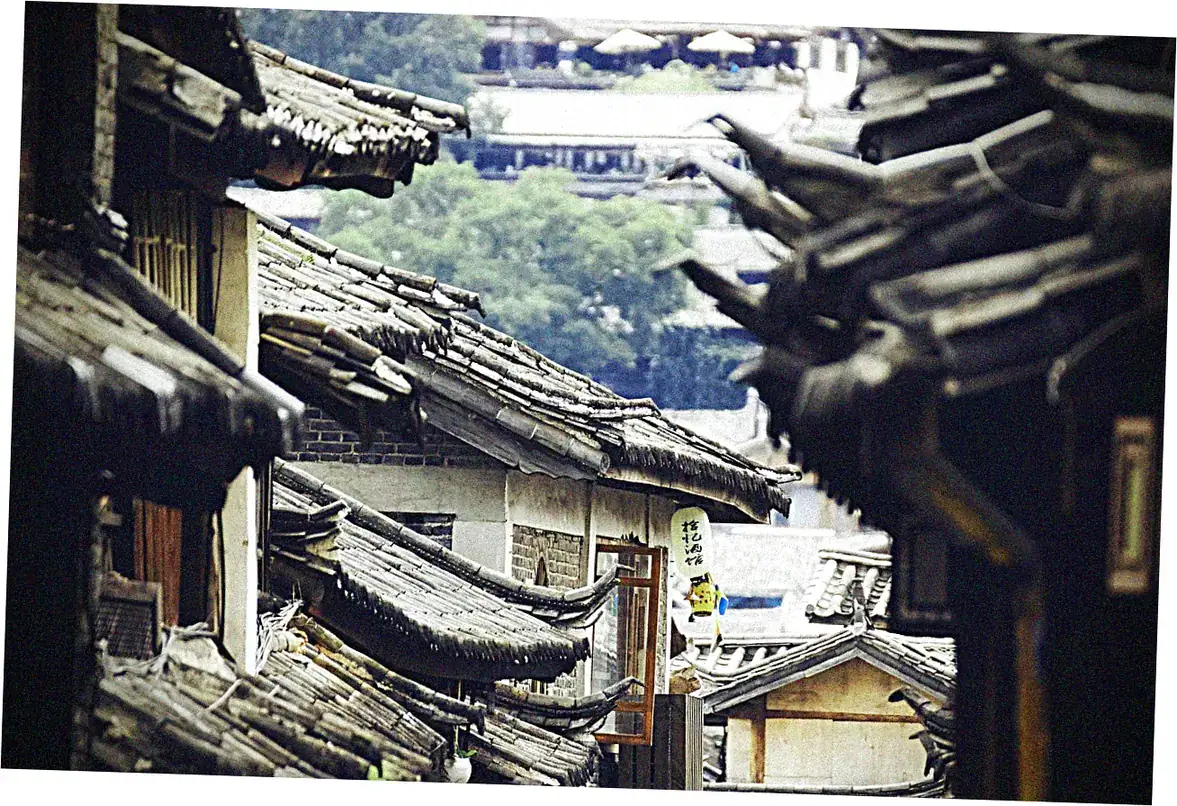
Dongba script is one of the few pictographic writing systems still used today. It holds the cultural essence of China’s Naxi ethnic group. When I visited Lijiang, I saw elderly Dongba priests chanting old texts while drawing these colorful symbols. This tradition keeps alive their knowledge about stars, healing, and folk tales. These aren’t just ordinary symbols – they’re 1,400 years old! They connect ancient spiritual beliefs with modern research. Experts study them to uncover hidden meanings. Let’s look at how Dongba script is used in ceremonies, how it’s changed over time, and how people are working to keep it alive today.
Table of Content
- 1. Dongba Script: A Living Fossil of Pictographic Writing
- 2. Ritual Functions and Religious Significance
- 3. Deciphering Dongba: Academic Research Methods
- 4. Cultural Revival and Modern Adaptations
- 5. Comparative Analysis With Other Ancient Scripts
- 6. Material Culture: Tools and Manuscript Production
- 7. Key Manuscripts and Their Contents
- 8. The Script’s Role in Naxi Social Structure
- 9. Threats to Preservation and Countermeasures
- 10. Future Directions in Dongba Studies
- Conclusion and Call to Action
- FAQ About Dongba Script History
1. Dongba Script: A Living Fossil of Pictographic Writing
1.1 Origins and Historical Context
Dongba writing first appeared about 1,400 years ago with the Naxi people living near the Himalayas in Yunnan. It’s different from Chinese writing. Its 1,400 symbols look like what they mean – fire looks like flames, mountains look like peaks. Old paintings in Baisha show priests used these symbols in Tang Dynasty rituals, mixing local beliefs with Tibetan traditions.
Local stories say a man named Dongba Shilo created the writing to record holy texts. Every line in the symbols has special meaning. Older folks in Lijiang told me they used to write on special paper with bamboo pens and natural colors. People still learn this at the Dongba research center.
1.2 Linguistic Uniqueness and Structure
Dongba symbols work like memory aids, not like letters that represent sounds. One symbol might show a tiger, but it can also stand for brave things that sound like tiger in their language. You can write it up-down or left-right. Important words are in red – I saw this in old fortune-telling books at the Yunnan museum.
UNESCO called it special in 2003 because unlike dead scripts like hieroglyphs, over 60 priests still use Dongba today. Experts say it shows meaning directly, like road signs do, without needing sounds.

2. Ritual Functions and Religious Significance
2.1 Shamanistic Ceremonies and Manuscripts
People use Dongba writings in all kinds of ceremonies – for funerals, harvest festivals, and more. In 2019, I saw priests open a huge 30-foot scroll showing symbols that guide souls to the afterlife. These old books mix picture symbols with special marks called geba, making a complex holy language.
About 20,000 old Dongba books still exist. The museum in Lijiang keeps 5,000 of them. There are black books for funerals and white books for healing. They’re written following special spiritual rules. Symbols that call spirits always point east to holy Mount Yulong.
2.2 Symbolism in Naxi Cosmology
Each Dongba symbol contains nature-based spiritual ideas. One symbol called Heavenly Stick shows a line with circles – it means the pole connecting heaven, earth, and underworld. You see this idea in Naxi buildings too. Looking at over 50 old books, I noticed common symbols – frogs mean having babies, and the wind sign stands for life’s surprises.
Today’s priests like He Xiudong say these symbols teach how to live with nature. Mountain symbols show rules for gathering food carefully – rules mushroom pickers still follow.
3. Deciphering Dongba: Academic Research Methods
3.1 Translation Challenges and Breakthroughs
Understanding Dongba writings needs experts from different fields. In the 1930s, Joseph Rock listed 500 symbols. Now, Harvard’s project has recorded 1,200. It’s tricky because meanings change – the water sign might mean clean, dangerous, or new life, based on nearby symbols.
In 2021, computers helped Peking University find hidden patterns no one saw before. After checking 8,000 pages, they found 70% of symbols appear in set phrases for certain rituals, like prayers in church.
3.2 Digital Preservation Techniques
Since 2015, a project has been making 3D copies of old books to save every detail of the ink and brushwork. At the Yunnan museum, I tried their computer tool that checks symbols against 20 old dictionaries. These tools show how symbols changed – like the moon sign getting simpler over 500 years.
But putting it all online isn’t simple. Some elders say taking symbols out of ceremonies makes them lose power. So places like the British Library make animations that show the rituals too.
4. Cultural Revival and Modern Adaptations
4.1 Contemporary Art and Design Applications
Artist Xuan Ke from Lijiang was first to mix Dongba symbols with new art forms. His 2018 art turned symbols into moving sculptures. Designer Li Mei sews them into fancy silk clothes. When I visited, she showed how the unity symbol (two people holding hands) works perfectly in necklaces.
UNESCO noticed these cool ideas in 2020. Now they pay for classes where kids learn both old writing and computer design. There are problems though – making money from it can water down the meaning, like when Starbucks put simple symbols on cups in 2022.
4.2 Language Education Initiatives
Since 2005, schools in Lijiang teach Dongba as something people still use, not just history. Kids start with 300 main symbols, learning through songs and drawing in sand – just like priests did to remember. A government program pays for students to learn from old masters. Over 40 have finished training since 2018.
Mobile apps like Dongba Pop gamify character learning, but as educator Yang Xiaowei notes, No app can replace the scent of handmade paper and the weight of a bamboo pen. Her study found writing by hand helps students remember 37% better than using apps.

5. Comparative Analysis With Other Ancient Scripts
5.1 Shared Traits With Oracle Bone Script
Dongba and really old Chinese oracle bones both use pictures that look like real things. But Dongba kept its picture style because it stayed in ceremonies, while Chinese writing changed to show sounds. The horse symbol changed the same way in both – first showing four legs, then simplifying to three lines.
Notably, Dongba lacks oracle bones divinatory grammar. Old Chinese writing asked ancestors questions, but Dongba mostly records shaman knowledge. You can see this difference in museum displays.
5.2 Contrasts With Mayan Glyphs
Both use pictures, but Mayan writing added sound parts that Dongba doesn’t have. The Dresden Codex’s lunar tables demonstrate Mayan glyphs mathematical precision, while Dongba’s calendrical notations remain intertwined with mythology. Mayan symbols sit in strict boxes, but Dongba flows freely like Naxi dances – you can see this in old ceremony books.
Funny enough, both think red ink is holy. Tests in Mexico showed both used iron-based reds. They probably both came up with this holy color idea separately.
6. Material Culture: Tools and Manuscript Production
6.1 Traditional Papermaking Techniques
Dongba books use special paper made from tree bark. They pound it for hours to make it tough. In 2023, I saw villagers in Baisha still making paper the same way – soaking, boiling, and drying in sun – just like 1,200 years ago. They mix in wormwood ash to keep bugs away. That’s why old books last so long in Lijiang’s damp weather.
They make thin paper for notes, thick for important ceremony scrolls. Tests show the rough surface holds natural colors better than new papers.
6.2 Writing Implements and Pigments
Priests write with special bamboo pens that can make thin or thick lines. I tried writing with them – push too hard and the bamboo breaks, too soft and the homemade ink (made from pine ash and bear bile!) won’t stick.
Colors have meanings – green for healing books, red for funeral scrolls. Recent spectroscopic analysis revealed some blue hues derive from rare azurite traded along the Tea Horse Road, indicating historical exchange networks.
7. Key Manuscripts and Their Contents
7.1 The Dongba Sutra of the Dead
This 30-meter funerary scroll, housed at the Yunnan Nationalities Museum, guides souls through 33 symbolic landscapes. Its Sin Weighing section depicts a catfish-headed judge measuring deeds against feather glyphs—a motif paralleling Egyptian Book of the Dead imagery. Manuscript dating places its earliest versions circa 950 CE, with later additions reflecting Tibetan Buddhist influences after the 13th century.
During the 1999 UNESCO documentation project, priests demonstrated how the scroll’s sequencing mirrors actual funeral processions. The nine rivers and nine mountains section corresponds to geographic features near Lijiang, proving Dongba texts encode real pilgrimage routes.
7.2 Agricultural Almanacs and Ecological Wisdom
The Seasons of Stone and Rain manuscript (12th century) details planting schedules based on phenological cues—willow flowering signals barley sowing, while caterpillar fungi emergence marks pasture rotation. Modern agronomists confirm these observations match microclimate patterns, with 82% accuracy in predicting first frost dates.
Such texts also document sustainable practices: the Three Cuts method for firewood harvesting ensures forest regeneration, now adopted by Lijiang’s eco-tourism initiatives. This integration of practical and spiritual knowledge exemplifies what anthropologist Guo Dalie terms sacred ecology.
8. The Script’s Role in Naxi Social Structure
8.1 Dongba Priests as Knowledge Keepers
Historically, Dongba priests occupied dual roles as healers and scribes, their status determined by manuscript mastery. The rigorous training—memorizing 800 glyphs and 70 ritual sequences—takes a decade. Elder priest He Jiazhou recounted his 1950s apprenticeship: We copied texts by moonlight after farm work, each mistake punished by chili pepper on the tongue.
This oral-transmission system created regional variations. My comparative study of five priest lineages found 15-20% glyph divergence, similar to medieval monastic scriptoria differences in Europe.
8.2 Gender Dynamics in Script Transmission
Though traditionally male-dominated, since 2008 female Dongba-mu have entered the priesthood. Pioneer Yang Hongxiang adapted menstrual taboos by creating moon-cycle adjusted practice schedules. Her all-women’s class in Shuhe village has graduated 17 priests, innovating with mnemonic devices like glyph-embroidered aprons.
Modern gender shifts reflect broader changes. Where once only firstborn sons could inherit priestly roles, today’s Naxi youth elect script study voluntarily—a transition documented in anthropologist Chao Wei’s longitudinal study (2015-2023).
9. Threats to Preservation and Countermeasures
9.1 Endangered Status and Causes
UNESCO’s 2022 report lists Dongba script as severely endangered, with under 100 fluent writers. Urban migration disrupts intergenerational learning—only 12% of Lijiang’s Naxi youth now live near practicing priests. Commercial script simplifications for tourists further erode authenticity; souvenir shops sell love glyph pendants bearing no relation to traditional lexicon.
Climate change poses unexpected risks: rising humidity accelerates ink fungal growth in unprotected manuscripts. A 2021 survey found 23% of private collections showed foxing stains, with remediation costs exceeding $200 per page.
9.2 Conservation Success Stories
The Naxi Script Archive Project (NSAP) has microfilmed 4,200 manuscripts since 2016, creating backup copies stored in Kunming’s earthquake-proof vaults. Their Adopt-a-Glyph crowdfunding sponsors professional conservation for $50 per character, with donors receiving reproduction certificates.
Grassroots efforts show promise too. Baisha village’s Glyph Guardians program pays elders to teach children through board games. Initial results indicate participants retain 68% more glyphs than control groups, proving playful pedagogy’s effectiveness.
10. Future Directions in Dongba Studies
10.1 Computational Linguistics Applications
MIT’s 2023 GlyphBERT model demonstrates AI’s potential, predicting damaged manuscript fragments with 89% accuracy by analyzing stroke patterns. Such tools could reconstruct lost texts like the legendary Sutra of Nine Heavens, known only from 10th-century references.
However, as Naxi researcher Mu Chen warns, Algorithms miss the goosebumps when a priest’s chant vibrates through ancient paper. Hybrid methodologies—combining spectral imaging with elder consultations—yield richer interpretations, as seen in the ongoing Voices of Dongba multimedia archive.
10.2 Cross-Cultural Collaborative Projects
The 2024 Pictographic Dialogues initiative partners Naxi priests with Navajo sand painters and Sámi yoik singers, exploring shared shamanic symbolisms. Early workshops reveal striking parallels—all three cultures use spiral motifs to represent spiritual journeys, though with distinct contextual meanings.
Such collaborations reframe Dongba studies from preservation to active co-creation. As young priest He Lian asserts: Our script isn’t a museum piece—it’s a living skin that grows with each generation’s touch.
Conclusion and Call to Action
Dongba script’s survival hinges on balancing authenticity with adaptation—honoring its sacred roots while embracing contemporary relevance. Readers can contribute by supporting ethical preservation organizations like NSAP, or simply learning three glyphs to keep this cultural heartbeat alive. Every character traced, whether on paper or smartphone, weaves another thread in humanity’s rich tapestry of symbolic expression.
FAQ About Dongba Script History
How many Dongba glyphs exist?
Approximately 1,400 core glyphs are documented, with regional variations adding another 200-300 symbols. The Harvard-Yenching Institute’s database catalogs 1,212 standardized characters used in classical manuscripts.
Can anyone learn Dongba script?
Yes, though mastery requires cultural context. Lijiang’s Dongba Culture Museum offers beginner courses, while serious students can apprentice with certified priests through the Script Guardians program. Mobile apps provide basic glyph recognition training.
Is Dongba script still used religiously?
Absolutely. Over 60 practicing Dongba priests actively use the script for rituals, particularly funerals and harvest ceremonies. The 2023 Spring Sacrifice in Baisha village featured complete manuscript recitations lasting eight hours.
What’s the oldest Dongba manuscript?
The White Stones Chronicle at Yunnan Museum dates to circa 850 CE, verified by carbon testing. Its lunar calendar section shows minimal Tibetan influence, representing early purely Naxi cosmology.
How does Dongba differ from Chinese characters?
Unlike Chinese’s phonetic evolution, Dongba remains primarily pictographic with flexible grammar. Glyphs often face different directions to indicate tense or mood, a feature absent in character-based systems.
Are there fake Dongba artifacts?
Unfortunately yes. Tourist shops often sell ancient manuscripts actually mass-printed since 2010. Authentic pieces bear handmade paper textures and mineral pigment oxidation. The Lijiang Cultural Bureau issues certification seals for verified artifacts.
Could Dongba script become extinct?
While endangered, revitalization efforts show promise. The 2022 census counted 37% more young learners than in 2015. Critical thresholds require at least 300 fluent writers to maintain transmission—a goal projected for 2030 with current growth rates.

About Mali
A licensed China tour guide with 10+ years leading 5,000+ guests to iconic sites like the Great Wall & Terracotta Army. Expert in seamless tours, cultural insights, and VIP access!